

![]() |
|||||||||||||||||||||||||||||||||||||||||||||
Doctors' Research
|
|||||||||||||||||||||||||||||||||||||||||||||
| Vegetarian FOOD Nutrient | Compared to USP/Mineral Salt |
|
| Vitamin A | More complete, as scientists teach that vitamin A is not an isolate [13] | |
| Vitamin B-9 | More utilizable above 266mcg (Recommended Daily Intake is 400mcg) [14] | |
| Vitamin C | Over 15.6 times antioxidant effect [15] | |
| Vitamin D | Over 10 times the antirachitic effect [16] | |
| Vitamin E | Up to 4.0 times the free radical scavenging strength [17] | |
| Vitamin K | Safer for children [18] | |
| Calcium | 7 times as effective in raising serum ionic calcium levels [19] | |
| Chromium | Up to 25 times more bioavailable [20] |
|
| Iron | Non-constipating, better absorbed [21] | |
| Magnesium | Better absorbed and retained [22] | |
| Selenium | Nearly 2 times better retained [23] | |
| Zinc | Better absorption, better form [24,25] |
Numerous university studies have concluded that supplements containing food nutrients are better than USP isolates. Food nutrients are better because they contain important enzymes, peptides, and phytonutrients CRITICAL to the UTILIZATION of vitamins and minerals which are not present in isolated USP nutrients. Published research has concluded that food vitamins are superior synthetic/USP vitamins.
References:
[1] Whitney EN, Hamilton EMN. Understanding Nutrition, 4th ed. West Publishing, New York, 1987
[2] Airola P. How to Get Well. Health Plus, Sherwood (OR), 1989
[3] Olson JA. Vitamin A, retinoids, and carotenoids. In Modern Nutrition in Health and Disease, 8th ed. Lea & Febiger, Phil.,1994:287-307
[4] Farrell PA, Roberts RJ. Vitamin E. In Modern Nutrition in Health and Disease, 8th ed. Lea & Febiger, Phil.,1994:326-358
[5] DeCava JA. The Real Truth about Vitamins & Antioxidants. A Printery, Centerfield (MA), 1997
[6] The United States Pharmacopeial Convention. USAN and USP Dictionary of Drug Names. Mack Printing, Easton (PA),1986
[7] Turnland JR. Bioavailability of dietary minerals to humans: the stable isotope approach. Crit Rev Food Sci Nutr,1991;30(4);387-396
[8] Schumann K, et al. Bioavailability of oral vitamins, minerals, and trace minerals in perspective. Arzneimittelforshcung,1997;47(4):369-380
[9] Ha SW. Rabbit study comparing yeast and isolated B vitamins (as described in Murray RP. Natural vs. Synthetic. Mark R. Anderson, 1995, p:A3). Ann Rev Physiol,1941; 3:259-282
[10] Thiel R. Natural vitamins may be superior to synthetic ones. Med Hypo.2000;55(6):461-469
[11] Thiel R.J, Fowkes S.W. Can cognitive deterioration associated with Down syndrome be reduced? Medical Hypotheses, 2005; 64(3):524-532
[12] Traber MG, Elsner A, Brigelius-Flohe R. Synthetic as compared with natural vitamin E is preferentially excreted as alpha-CEHC in human urine: studies using deuterated alpha-tocopherol acetates. FEBS Letters, 1998;437:145-148
[13] Ross A.C. Vitamin A and Carotenoids. In Modern Nutrition in Health and Disease, 10th ed. Lippincott William & Wilkins, Phil, 2005: 351-375
[14]Lucock M. Is folic acid the ultimate functional food component for disease prevention? BMJ, 2004;328:211-214
[15] Williams D. ORAC values for fruits and vegetables. Alternatives, 1999;7(22):171
[16] Thiel R. Vitamin D, rickets, and mainstream experts. Int J Naturopathy, 2003; 2(1)
[17] Traber MG. Vitamin E. In Modern Nutrition in Health and Disease, 9th ed. Williams & Wilkins, 1999:347-362
[18] Olson R.E. Vitamin K. In Modern Nutrition in Health and Nutrition, 9th ed. Williams & Wilkins, Balt., 1999: 363-380
[19] Hamet P, et al. The evaluation of the scientific evidence for a relationship between calcium and hypertension. J Nutr, 1995;125:311S-400S
[20] Ensminger AH, Ensminger ME, Konlade JE, Robson JRK. Food & Nutrition Encyclopedia, 2nd ed. CRC Press, New York, 1993
[21] Wood R.J., Ronnenberg A.G. Iron. In Modern Nutrition in Health and Disease, 10th ed. Lippincott William & Wilkins, Phil, 2005: 248-270
[22] Rude R.K., Shils M.E. Magnesium. In Modern Nutrition in Health and Disease, 10th ed. Lippincott William & Wilkins, Phil, 2005: 223-247
[23] Biotechnology in the Feed Industry. Nottingham Press, UK, 1995: 257-267
[24] Andlid TA, Veide J, Sandberg AS. Metabolism of extracellular inositol hexaphosphate (phytate) by Saccharomyces cerevisiae. Int J. Food Microbiology. 2004;97(2):157-169
[25] King JC, Cousins RJ. Zinc. In Modern Nutrition in Health and Disease, 10 th ed. Lipponcott Williams & Wilkins, Phil., 2005:271-285
Some of these studies (citations) may not conform to peer review standards. Therefore the results are not conclusive. Professionals can, and often do, come to different conclusions when reviewing scientific data (peer-reviewed or not).
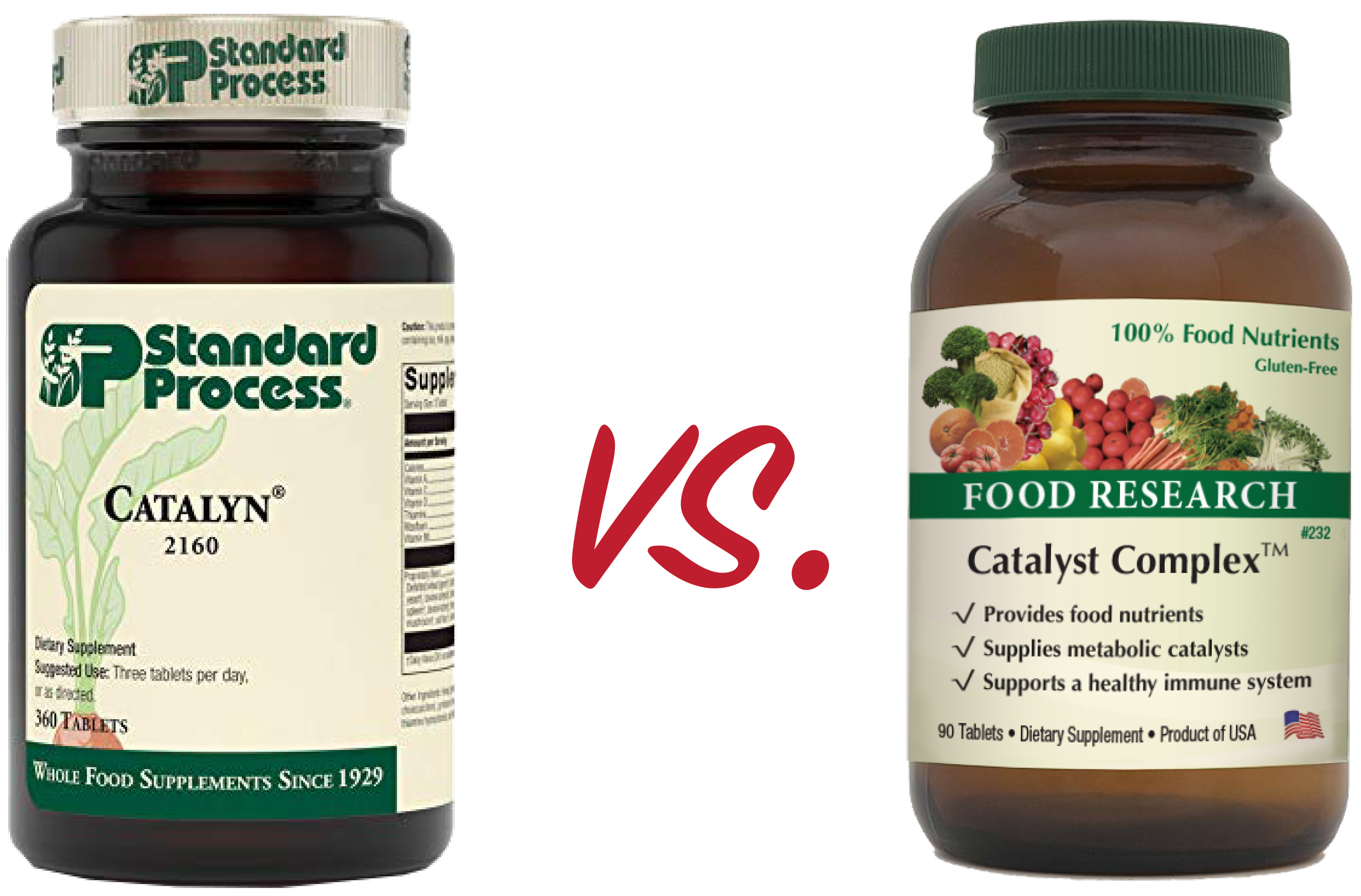
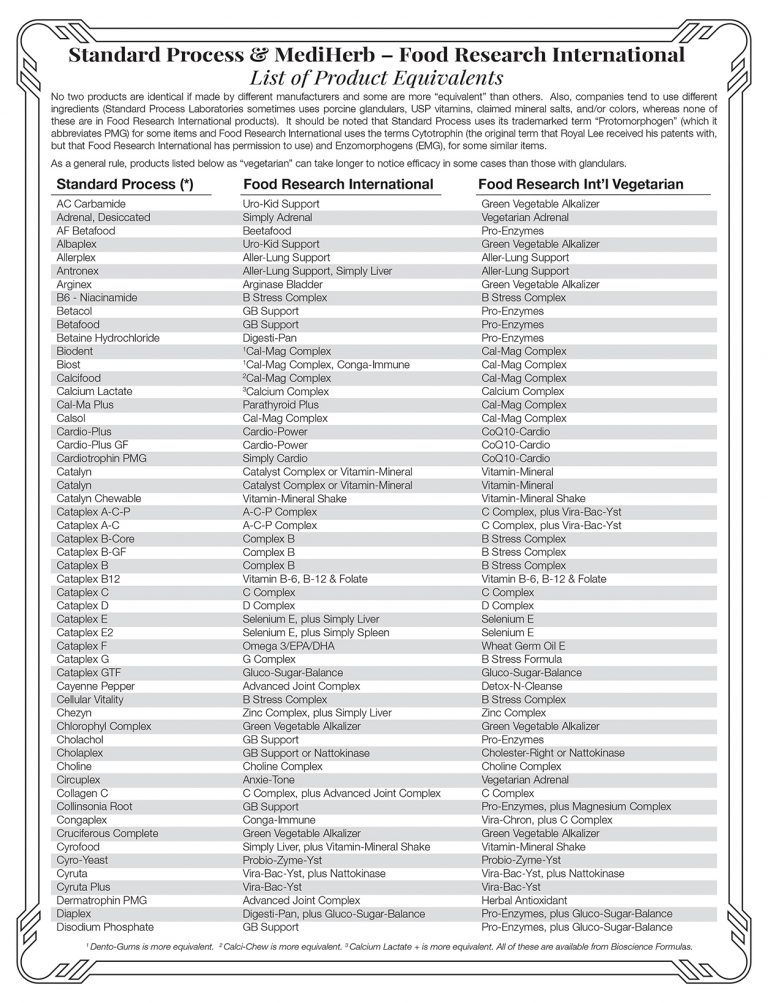
This site provides information for doctors and health care professionals and is not intended for use by consumer. View our Standard Process equivalents chart.